
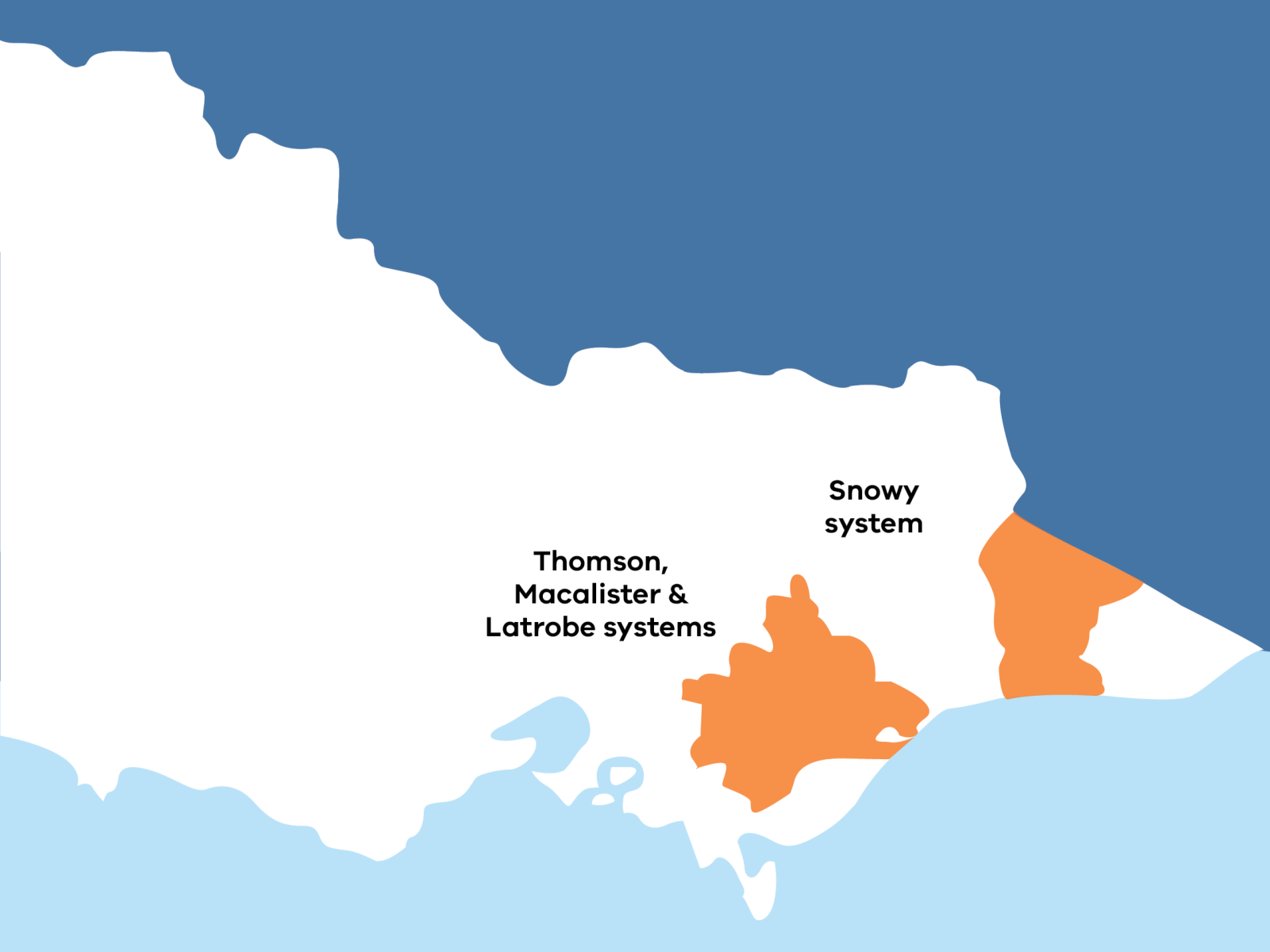
Gippsland experienced a generally warm year in 2025-26, with near-average rainfall but drier conditions through spring, summer and autumn. Environmental water deliveries in the Thomson and Macalister rivers helped maintain key flow patterns to support native fish breeding, movement and habitat connectivity. Deliveries included an 800 megalitres (ML) per day spring fresh and 800 ML per day autumn fresh in the Thomson River, and 350 ML per day autumn and winter freshes in the Macalister River. In the lower Latrobe wetlands, managed autumn watering helped maintain refuge habitat during a substantial drawdown. Environmental watering supported significant wetland plants, helped with vegetation recovery, and supported important ecological values across the region.
More information about the Gippsland region and its systems can be found on the region summary page.
Below is a brief highlight of some of the outcomes and achievements in the Gippsland region in 2025-26.
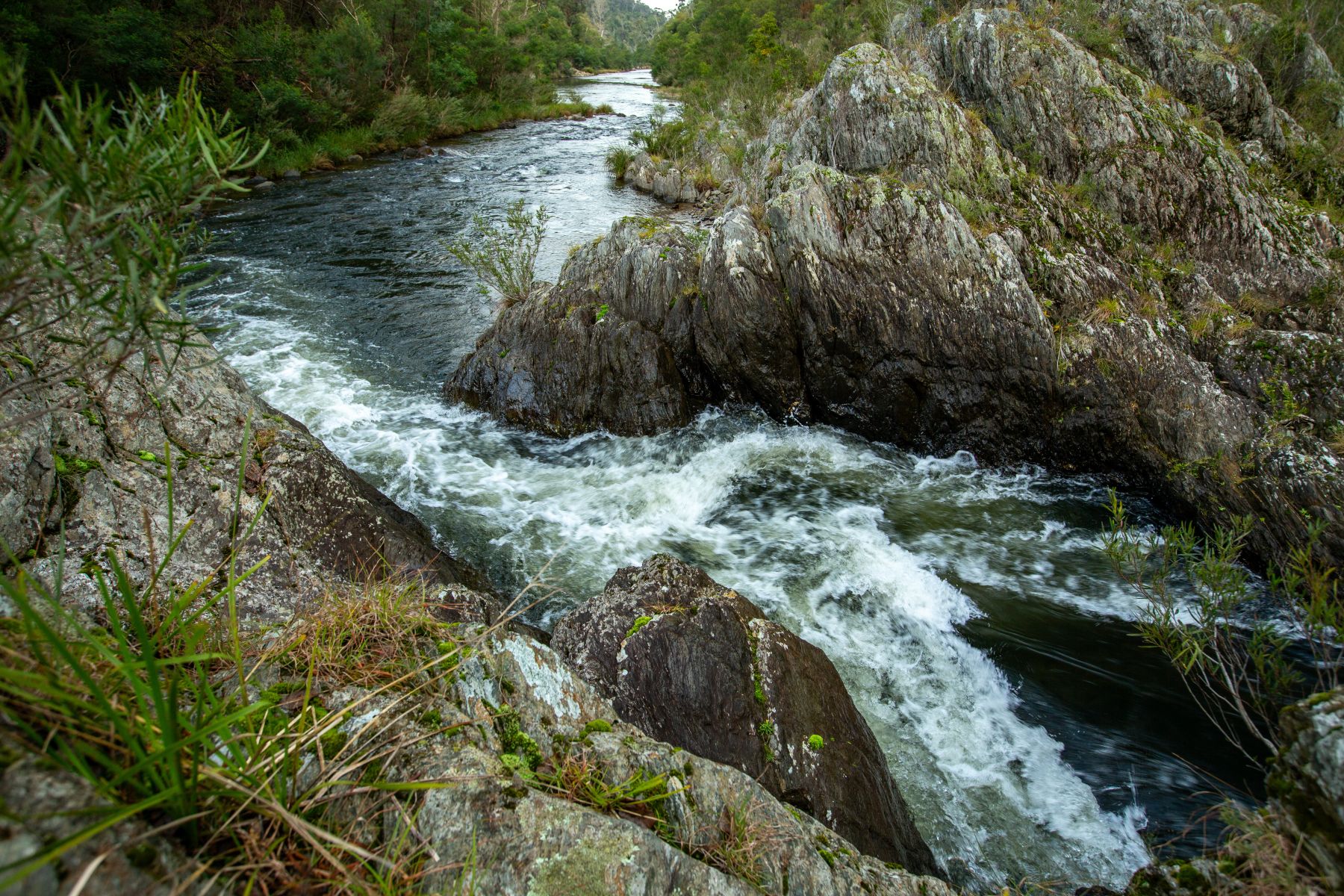
Thomson system
16,169 ML water for the environment delivered; six river reaches and Heyfield wetlands watered; 100% of required watering actions were partially or fully achieved.
Annual Thomson River fish surveys detected three Australian grayling and multiple sizes of tupong. Blackfish size class ranges indicate several recruitment events over the past few years.
The spring and autumn freshes provided by environmental water supported recreational activities, such as canoeing and kayaking, with many users planning their trips around the managed water releases.
Macalister system
12,984 ML water for the environment delivered; two reaches watered; 100% of required watering actions were partially or fully achieved.
A range of fish species were recorded in the Macalister River system, including Australian bass, estuary perch, sea mullet, Australian smelt, common galaxias, flatheaded gudgeon, long-finned eel, short-finned eel and vulnerable Flinders pygmy perch
Latrobe River system
No water delivered; 100% required watering actions were partially or fully achieved.
Due to ongoing constraint issues in the lower Latrobe River, no managed environmental water deliveries were made. However, natural flows have seen most dry scenario watering actions achieved. The environmental objectives supported by these flows include maintaining native fish, platypus and rakali populations; improving condition and extent of native vegetation; and avoiding poor water quality in the river.
Lower Latrobe wetlands
Three wetlands watered; 100% of required watering actions were partially or fully achieved.
Vulnerable annual fireweed was widespread across both Dowd Morass and Heart Morass and endangered eastern water-ribbon was also commonly recorded at Heart Morass.
At Sale Common, marsh club-sedge expanded substantially across monitored areas while overall plant diversity remained relatively high. Vulnerable river swamp wallaby-grass was recorded, and giant rush showed no expansion, consistent with the objective of limiting its spread.
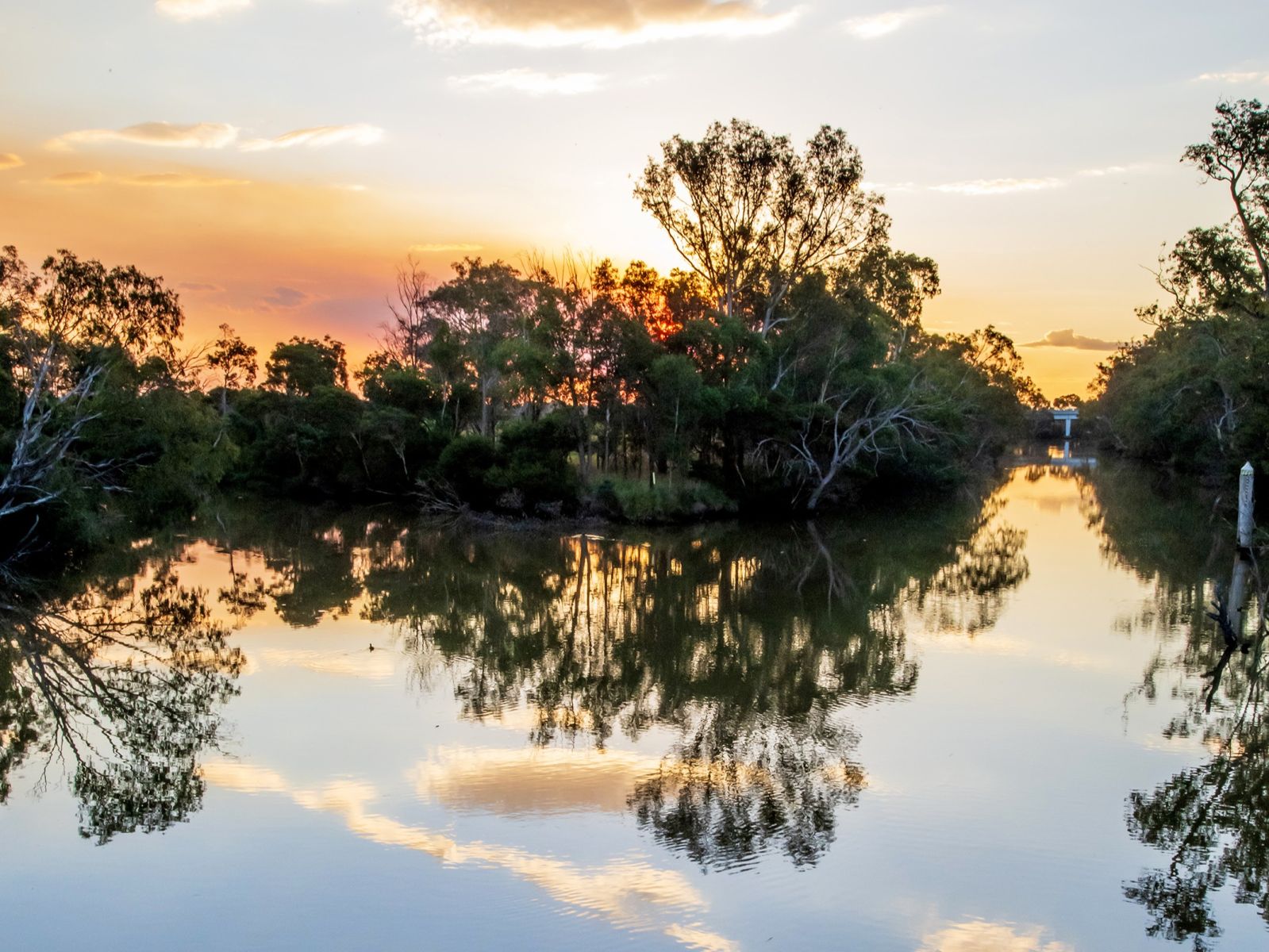
Snowy system
In 2025-26, the Snowy River received 167,200 ML of water for the environment. Releases from Lake Jindabyne were used to mimic seasonal snow melt patterns to enhance the river’s environmental and physical conditions.
Environmental water used in the Snowy system is held by the VEWH and New South Wales Department of Climate Change, Energy, the Environment and Water, who coordinates the delivery of water to the Snowy River, alongside the Snowy Advisory Committee and the storage manager, Snowy Hydro Limited. The VEWH contributes to environmental water management in the Snowy system through its Victorian water holdings and coordination with partner agencies.
Page last updated: 28/09/26