
The northern region contains six river systems, four major floodplains and many wetlands that can receive water for the environment. In 2025-26, most systems experienced dry to average conditions, with 757,014 megalitres (ML) of water for the environment delivered to 78 sites across the region. Water at some sites was made available by the Commonwealth Environmental Water Holder (CEWH) or the Living Murray (TLM) program.
Below is a brief highlight of some of the outcomes and achievements in the northern region in 2025-26. Due to the large area and number of sites watered, the outcomes and achievements are grouped by system and subsystem, according to the catchment, wetland grouping or floodplain area.
More information about the northern region and its systems can be found on the region summary page.
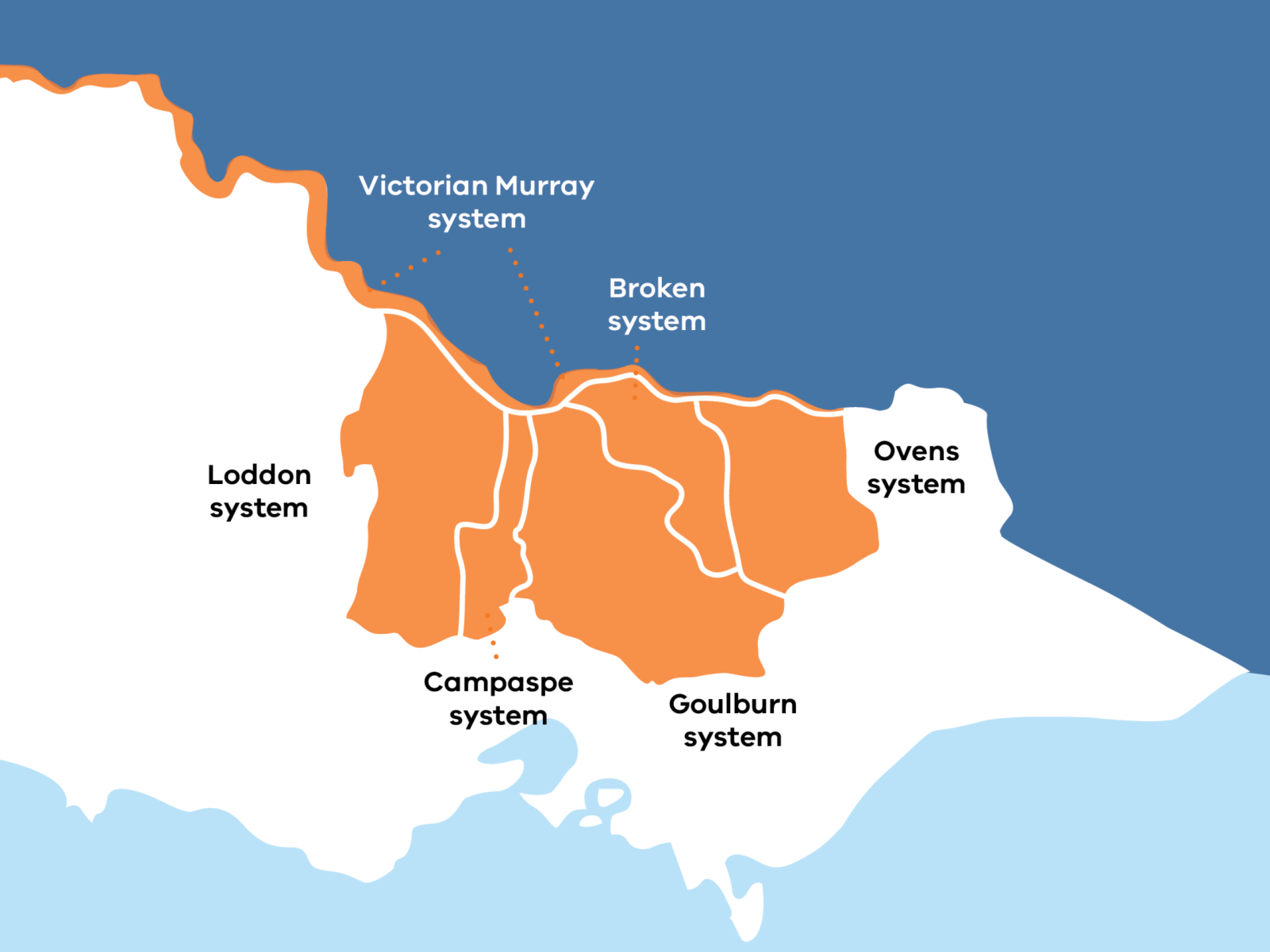
Broken system
62,081 ML water for the environment delivered; six reaches watered; three wetlands watered; 88% required watering actions were partially or fully achieved. This included water made available by the CEWH.
The Broken system experienced a generally dry 2025-26, with average to below-average rainfall and above-average temperatures. Environmental water was strategically delivered to the upper Broken Creek and key wetlands, including the first use of new delivery infrastructure at Moodie Swamp and Kinnairds Wetland, which were co-funded by the VEWH and the CEWH.
Ecological monitoring at the Broken wetlands revealed a strong response to environmental watering, including six brolgas at Moodie Swamp (with courtship behaviour observed). Environmental water at Kinnairds Wetland supported a variety of habitat types, and different waterbirds were observed as habitat changed throughout the inundation cycle.
Campaspe system
30,267 ML water for the environment delivered; four reaches watered; 100% required watering actions were partially or fully achieved. This included water made available by the CEWH and TLM.
The Campaspe system experienced a warm and variable 2025-26, with above-average annual rainfall but below-average winter and spring inflows, limited tributary contributions and periods of dry conditions.
Traditional Owner leadership continued to shape environmental watering priorities through a new joint management approach between Dja Dja Wurrung Clans Aboriginal Corporation and North Central Catchment Management Authority (CMA) for Dindilong Yaluk (Coliban River), co-developing the 2026-27 Seasonal Watering Proposal and embedding Djaara Traditional Knowledge and Caring for Country principles into water planning.
Fish monitoring in the Campaspe River recorded increasing numbers and distribution of native fish, including the highest numbers of golden perch in the lower reaches, and for the first time since monitoring began, trout cod recorded in the middle reaches and silver perch recorded above Lake Eppalock.
Goulburn system
434,705 ML water for the environment delivered; five reaches watered; five wetlands watered; 85% required watering actions were partially or fully achieved. This included water made available by the CEWH and TLM.
The Goulburn system experienced a warm and generally dry 2025-26, with below-average winter and spring inflows, limited tributary contributions and above-average temperatures.
Ecological monitoring found good numbers of Murray Darling rainbowfish in the Goulburn River. Murray cod and golden perch were present at most surveyed sites. The VEWH coordinated the delivery of an autumn fresh to maintain vegetation on the lower banks. Monitoring after the delivery showed an increase in sediment deposition, which improves bank stability.
Environmental water deliveries and natural inflows supported habitat for waterbirds, turtles, native fish and wetland vegetation at wetland sites, including Doctors Swamp, Loch Garry, Kanyapella Basin and Reedy Swamp. Environmental water management also recognises the value of drying cycles. Dry phases support nutrient cycling and help manage pest species such as European carp and cumbungi.
Read more about Taungurung Land and Waters Council’s delivery of water into Molesworth Billabongs in the case study found on the news page.
Loddon system
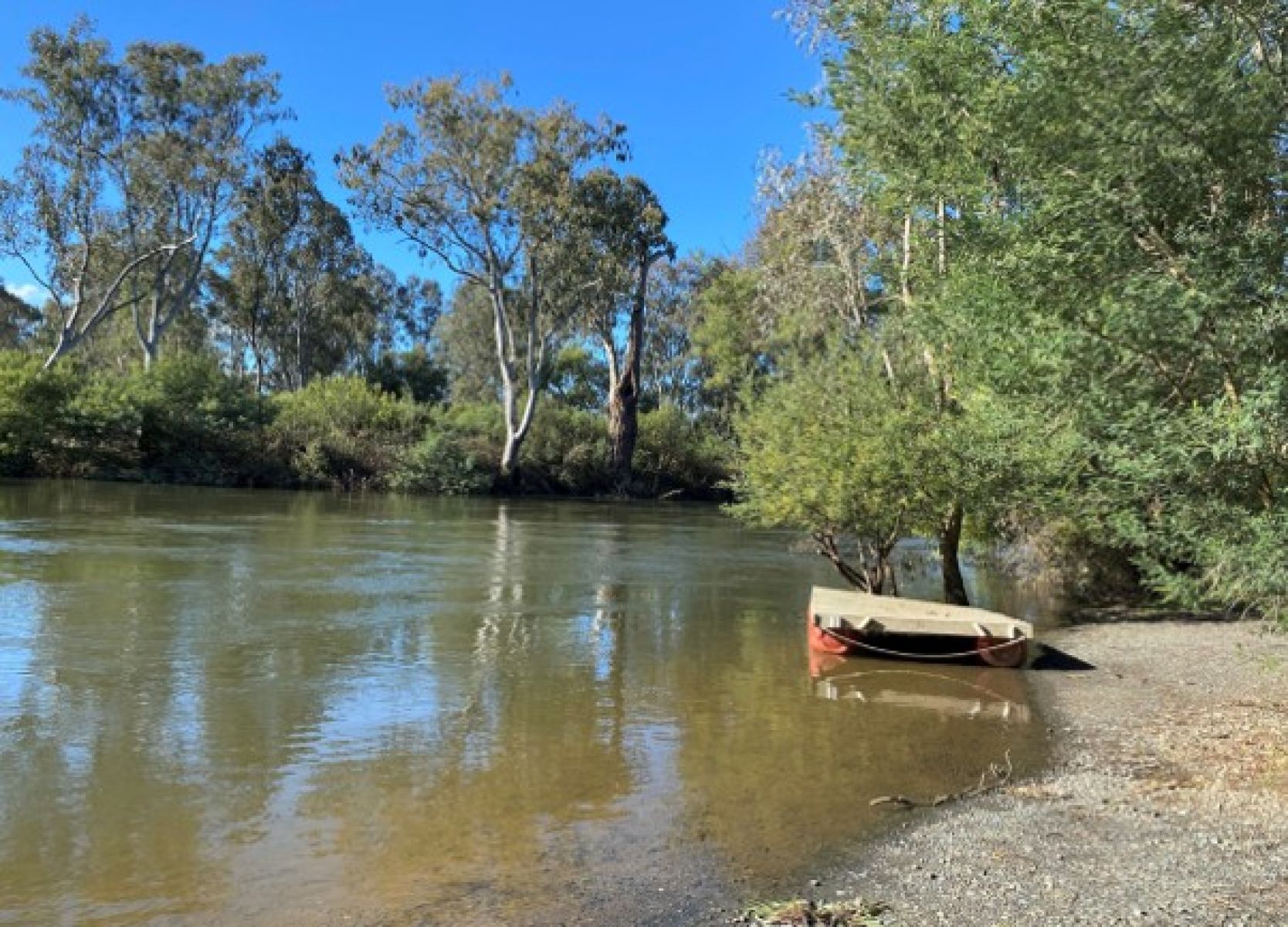
9,464 ML water for the environment delivered; 14 reaches watered; two wetlands watered; 89% required watering actions were partially or fully achieved. This included water made available by the CEWH.
In 2025-26, there was relatively low water availability in the Loddon system, with flows generally delivered in line with a drought to dry scenario. In Serpentine Creek, water was delivered to help maintain flows throughout the year and provide habitat for aquatic animals. These watering targets were achieved in summer and partially achieved in winter.
Surveys found several species of native fish, including Murray cod and golden perch in the Loddon River. The presence of young fish suggests environmental water has supported conditions to help them spawn and survive.
Ovens system
300 ML water for the environment delivered; five reaches watered; one wetland watered; 100% required watering actions were partially or fully achieved. This included water made available by the CEWH.
Environmental water was delivered to Mullinmur Wetland, near Wangaratta, to support freshwater catfish after concerns about low water levels and poor water quality. Following, the water level increased by 80 cm, oxygen levels improved and freshwater catfish were still present.
Donated water plays a role in the Ovens River system, with Taungurung Land and Waters Council donating water since 2019 and in 2025-26 private donors contributing 138 ML to the King and Buffalo rivers. North East CMA and Goulburn-Murray Water work together to shape deliveries using environmental, donor water and operational water.
Victorian Murray system
Barmah Forest subsystem
118,160 ML water for the environment delivered; three wetlands watered; 67% required watering actions were partially or fully achieved. This included water made available by the CEWH and TLM.
Environmental water delivery in Barmah Forest supported the inundation of the lower floodplain, helping to mimic a natural flood. At wetlands with water, monitoring showed vegetation condition was good-to-excellent, including the presence of Moira grass and floating swamp wallaby-grass.
Detailed ecological monitoring for Barmah-Millewa Forest is undertaken through the Living Murray program.
Gunbower subsystem
57,475 ML water for the environment delivered; two reaches watered; five wetlands watered; 91% required watering actions were partially or fully achieved. This included water made available by the CEWH and TLM.
In winter and spring of 2025, environmental water was delivered to Gunbower Forest to inundate wetlands and some areas of low-lying floodplain. In recent years, much of the forest has experienced less flooding than it needs. The floodplain vegetation in areas with environmental water delivered in 2025-26 showed positive signs, such as increased cover, and records of threatened species. Flood-dependent areas that didn’t receive environmental water showed signs of drought stress.
In 2025-26, 17.3 gigalitres of environmental water was delivered in Gunbower Creek to mimic natural flows. Monitoring showed the creek continues to support resilient native fish populations, including golden perch, silver perch, and spawning Murray cod.
Detailed ecological monitoring for the Gunbower system is undertaken through the Living Murray program.
Lindsay, Mulcra and Wallpolla islands subsystem
5,185 ML water for the environment delivered; two reaches watered; five wetlands watered; 80% required watering actions were partially or fully achieved. This water was made available by TLM.
Water delivery in the Lindsay, Mulcra and Wallpolla system resulted in a number of environmental outcomes, such as: flows through Potterwalkagee Creek that supported dispersal of native fish and improved red gum condition; inundation of floodplain habitat at Mulcra Horseshoe that supported a number of waterbird species; and spring flows in Mullaroo Creek that supported native fish movement and spawning.
Detailed ecological monitoring for the Lindsay, Mulcra and Wallpolla islands subsystem is undertaken through the Living Murray program.
Central Murray wetlands
12,823 ML water for the environment delivered; eight wetlands (including Reed Bed Swamp complex) watered; 100% required watering actions were achieved.
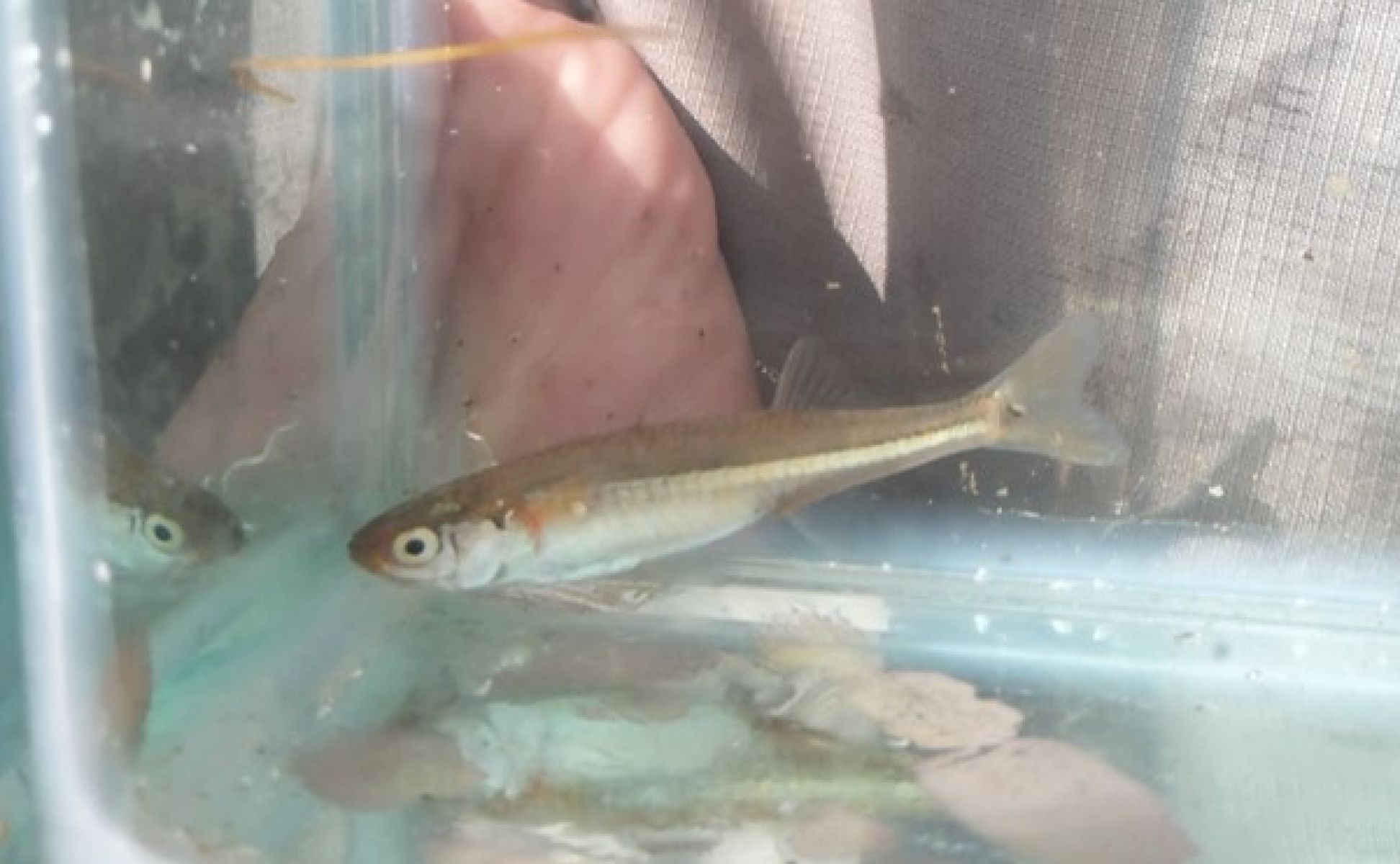
Water for the environment continued to support populations of critically endangered small-bodied fishes, including Murray hardyhead at Lake Elizabeth and southern purple-spotted gudgeon at Hird Swamp.
Waterbirds were abundant in the wetlands, including thousands of black swans, grey teal grebes and shelduck. Species of interest recorded include Australasian bitterns, white-bellied sea eagles and magpie geese. Birdwatching was a popular activity at the wetlands, with a formal event held at Hird Swamp, and lots of informal birdwatching opportunities provided by environmental water management.
Hattah Lakes subsystem
No environmental water was delivered to the Hattah Lakes in 2025-26, to allow the lakes to draw down and as part of the natural wetting-drying cycle. Despite a large rainfall event, most of the lakes dried, as planned, allowing for the establishment of lakebed herbland communities growing on exposed soils, and providing foraging habitat for shorebirds.
Lower Murray wetlands
2,561 ML water for the environment delivered; seven wetlands watered; 100% required watering actions were partially or fully achieved. This included water made available by the CEWH.
The new regulator at Catfish Billabong meant water could be delivered to and held in the wetland for longer periods, inundating the surrounding floodplain vegetation (including several threatened species), and supporting strong bird populations in the wetland.
At Brickworks Billabong, water was delivered to support critically endangered Murray hardyhead which were translocated in 2025-26. Monitoring revealed they were establishing well.
Upper Murray wetlands – Ryans Lagoon wetland complex
214 ML water for the environment delivered; one wetland watered; 100% required watering actions were partially or fully achieved. This water was made available by the CEWH.
In 2025-26, water delivery achieved a complete fill of Ryans Lagoon 2, and a partial fill of Ryans Lagoon 1. The watering has reduced the number of invasive plant species present at inundated sites and increased the coverage of wetland plants. Since the watering began in 2024, it has supported culturally significant species, such as turtles and frogs, and 80 species of birds.
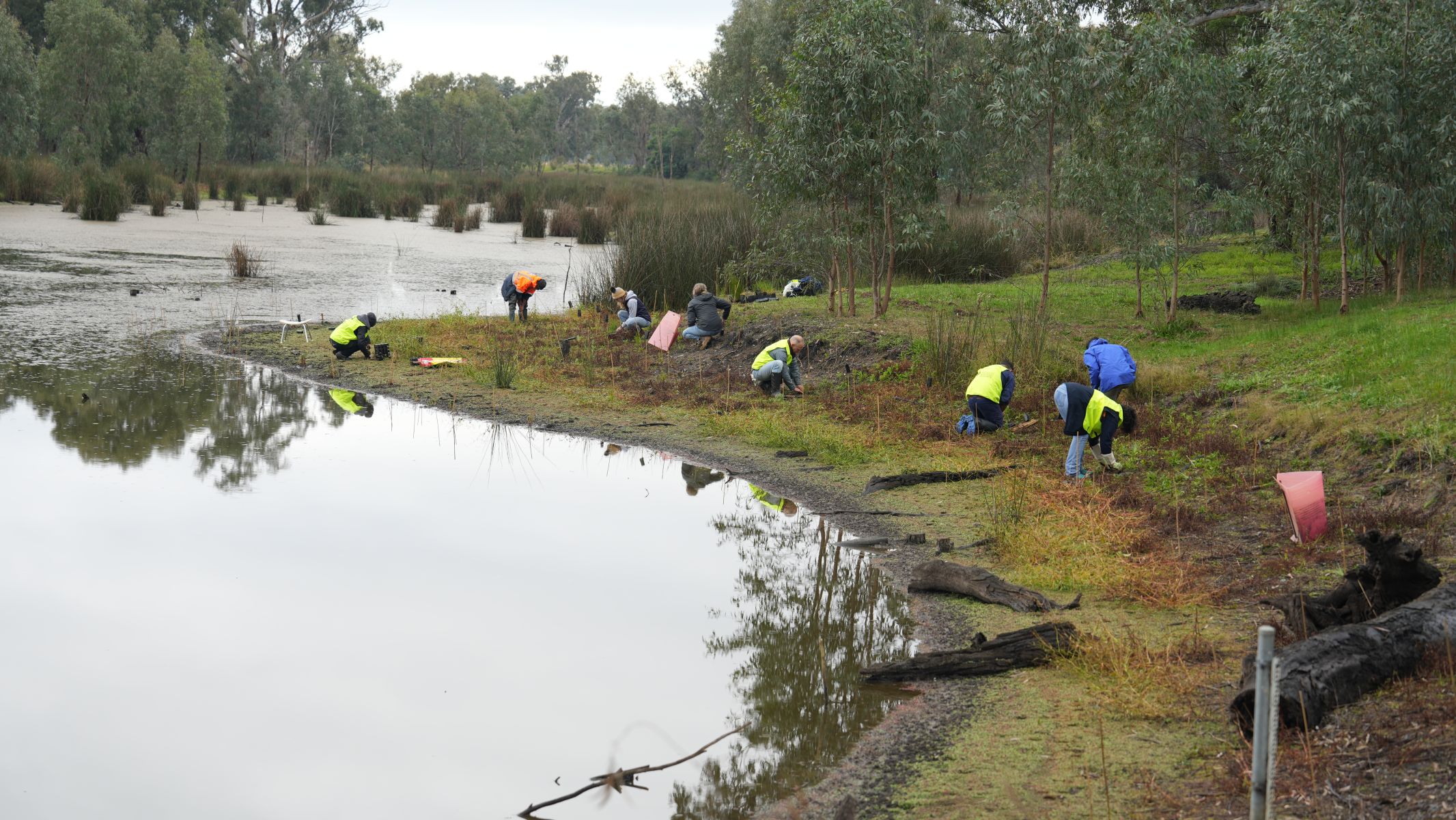
The environmental water delivery supported restoration work by Duduroa Dhargal Aboriginal Corporation and the North East CMA, including weed removal and planting of aquatic vegetation.
Page last updated: 28/09/26